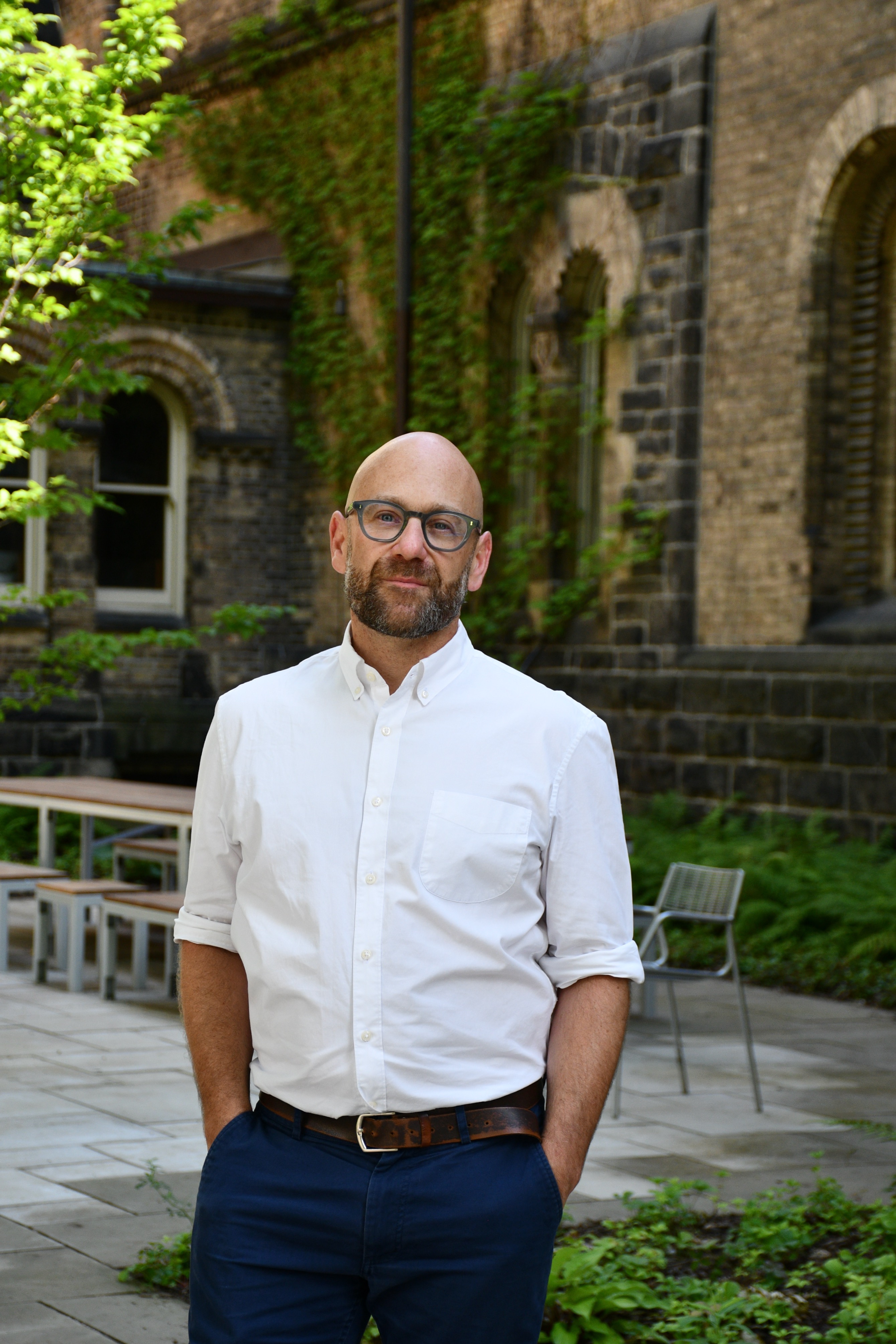
Tom Kemeny
Cities, innovation, and inequality
Professor, Munk School of Global Affairs & Public Policy, University of Toronto
What I work on
I study how cities are engines of economic growth, why innovation is spatially concentrated, and how these processes shape inequality within and between communities.
Bio
I am a Professor in the Munk School of Global Affairs & Public Policy at the University of Toronto, where I'm part of the Innovation Policy Lab . I'm also a Visiting Senior Fellow in the International Inequalities Institute at the London School of Economics. Before joining U of T, I held academic appointments at Queen Mary, University of London; the University of Southampton; the London School of Economics; and UNC Chapel Hill. I received my PhD from UCLA. My research focuses on the spatial dynamics of economic growth, innovation, and inequality—work that has been recognized by several academic prizes and press coverage in outlets including The Guardian, Washington Post, and Bloomberg.
“Who gets left behind by left behind places?” won the 2024 Editor’s Choice Award at the Cambridge Journal of Regions, Economy & Society. For our study on Brexit and residential immobility, my team and I won the 2019 Understanding Society Paper Prize. In 2016, my work on the economic value of local social networks won the Urban Land Institute Prize for the best paper published in the Journal of Economic Geography.
Research themes
Spatial inequality
Patterns, causes and consequences of place-based forms of inequality
Today, your location plays a profound role in shaping the kinds of jobs, wealth, and economic opportunity you will encounter. This was meaningfully less true in the past. My research documents this fundamental geographical reshaping of society in high-income countries, examining its deep causes, and exploring its effects on jobs, health, voting patterns, and social mobility.
Innovation
Technological change and the production of knowledge over time and space.
Some cities act as nurseries for new ideas, spurring breakthrough innovations, creating new forms of work, and sparking prosperity. What are the ingredients that distinguish these innovative hubs, and can other places cultivate them?
Migration and diversity
How immigrants affect productivity, innovation and entrepreneurship
Countries like the United States, Canada, and the UK are profoundly shaped by immigration. How do immigration and diversity affect firms, cities and national economies—what do they mean for productivity, innovation, and entrepreneurship?
Selected work
GEOWEALTH
Suss, J., Kemeny, T., & Connor, D. S. (2024). GEOWEALTH-US: spatial wealth inequality data for the United States, 1960–2020. Scientific Data, 11(1), 253.
Wealth is hugely consequential for choice and stability, and is increasingly unequally held. Using GEOWEALTH, we provide a first glimpse at where it is held, across the thousands of communities where we live our lives. Our new data tracks the spatial distribution of wealth in the U.S., with data for Canada coming soon. Our broader mission is to develop public resources enabling the tracking of the causes, consequences, and trajectories of wealth accumulation across North America.
Selected Media: The Conversation, WNHN Radio (podcast)
Explore the data: GEOWEALTH-Lab,Who gets left behind by left behind places?
Connor, D. S., Berg, A. K., Kemeny, T., & Kedron, P. J. (2024). Cambridge Journal of Regions, Economy and Society, 17(1), 37-58.
🏆 2024 Editor's Choice Award
We document that poor children growing up in places left behind by today's economy experience lower levels of social mobility as adults—even when they move away from those struggling places as they grow up.
Disruptive innovation and spatial inequality
Kemeny, T., Petralia, S., & Storper, M. (2025). Regional Studies, 59(1), 2076824.
Across two industrial revolutions, we show that the production of the most important, breakthrough patents is initially highly spatially concentrated, and that these innovations play an important role in the overall distribution of prosperity across cities and regions.